
Building a Custom Home in Southern Wisconsin? Bring Your Interior Designer in Early
Building a custom home is an opportunity to create something entirely your own. A home shaped around the way you live, the things you love, and how you envision your life unfolding within it. But long before the furniture arrives or the final styling begins, hundreds of design decisions are already being made.
Floor plans. Cabinetry. Lighting. Plumbing. Flooring. Tile. Millwork. Hardware. Paint. The list grows quickly, and many of these choices are interconnected.
That is why one of the best times to bring an interior designer into a custom home project is often much earlier than you might think!
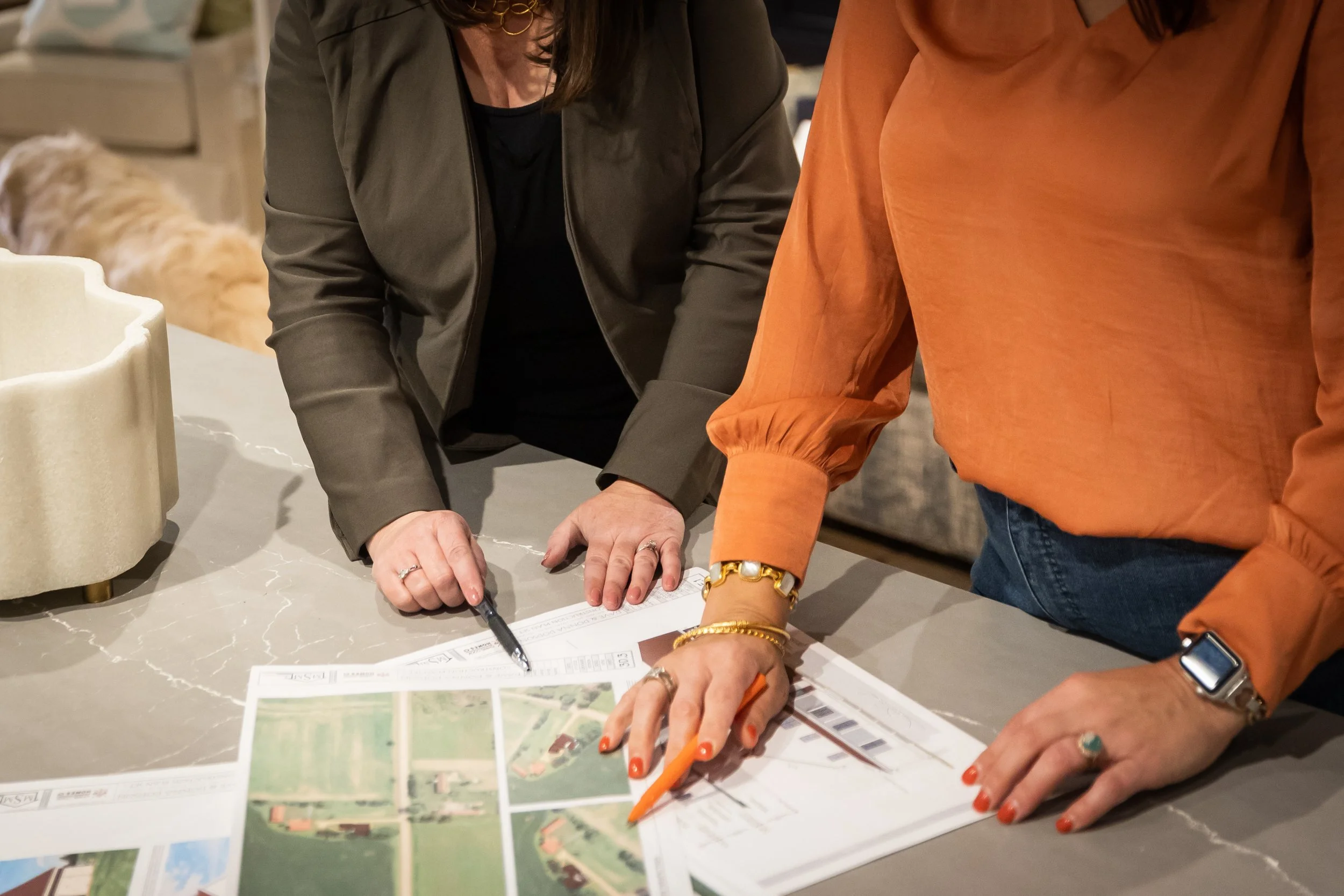
Interior Design Begins Before the Interiors
There is a common misconception that an interior designer comes in once the house has been built to select furnishings and make everything beautiful.
In a custom home, our work can begin much earlier! Working alongside your builder and architect during the planning stages allows us to consider not only how each room will look, but how it will function once you actually live there.
Is there enough room for the dining table you envision? Does the kitchen layout support the way your family cooks and gathers? Are outlets, sconces and ceiling fixtures positioned where they need to be? Will the furniture arrangement work with the windows, fireplace and traffic flow?
These may feel like small details on a set of plans, but they can have a significant impact on the finished home.
Creating a More Cohesive Home
A custom home involves countless individual selections, and it is easy to begin making each decision in isolation. The flooring may be beautiful. The cabinetry may be beautiful. The countertops, lighting and hardware may all be beautiful.
But do they belong together?
Establishing the overall design direction early creates a thread that can carry throughout the entire home. Materials, finishes, colors and architectural details can be considered as part of a larger story rather than a series of separate decisions. The result is a home that feels layered and personal, but also intentional from one room to the next.
Making Decisions With the Bigger Picture in Mind
Some of the most important interior design decisions are also construction decisions. Cabinet dimensions influence lighting placement. Plumbing selections can affect rough-ins. Furniture plans may determine where floor outlets belong. Tile layouts can influence niches, drains and fixture placement.
When these conversations happen early, the entire team can work from the same vision. — It can also reduce the need to revisit decisions later, when making a change may be more complicated, costly or disruptive to the construction schedule.
Protecting Your Budget Where It Matters
Custom doesn't have to mean choosing the most expensive option at every turn. A designer can help determine where an investment will make the greatest impact and where a simpler selection may work beautifully. Maybe custom cabinetry deserves a larger portion of the budget, while another area can be simplified. Perhaps an architectural detail is worth prioritizing during construction because it would be difficult to add later.
Looking at the home as a whole makes it easier to allocate resources thoughtfully rather than making one decision at a time without knowing what is still ahead.
Designing for the Way You Actually Live
Perhaps the greatest advantage of beginning the design process early is the opportunity to make the home truly personal.
A custom home should do more than look beautiful. It should support your routines. It should make everyday life easier. It should accommodate the way you entertain, work, cook, relax and gather with the people you love. Those conversations influence everything from kitchen storage and mudroom organization to lighting, furniture layouts and the relationship between rooms. When those details are considered from the beginning, they become part of the architecture rather than an afterthought.
A Collaborative Approach to Custom Home Design
The strongest custom homes are collaborative.
Your builder understands how the home comes together. Your architect shapes its structure and flow. Your interior designer considers how those spaces will ultimately function, feel and live.
When everyone is involved early and working toward the same vision, the process becomes more cohesive—and so does the finished home.
When you're building from the ground up, good design shouldn't be something added at the end. It should be part of the plan from the very beginning. At Inspired Spaces Interior Design, we work with homeowners throughout Janesville and Southern Wisconsin on custom homes, renovations and full-service interior design. From reviewing plans and selecting finishes to cabinetry, lighting, furnishings and final installation, we help connect the many individual decisions into a home that feels thoughtful, personal and entirely your own.
